


Moving an established freight agency to a different brokerage can feel like a major undertaking. You've spent years building customer relationships, developing a dependable carrier network, and figuring out how to keep freight moving. The last thing you want is a transition that disrupts your business.
I understand that concern. I moved my independent freight agency to Sureway Transportation Company in 2021 after spending approximately four years with another brokerage. At the time, my business was growing, but the brokerage I was working with wasn't able to grow alongside my customers.
Looking back, moving my agency was one of the most important business decisions I've made. And the actual transition? It was much smoother than I expected.
Today, I manage a five-person team supporting several large customers, including one with approximately 150 drop-trailer lanes. My experience has taught me that successfully moving a freight agency is about more than just choosing a new brokerage. It's about finding the right operational support, protecting the relationships you've built, and making sure your business has room to grow.
Here's what I'd encourage other independent freight agents to consider before making a move.
Key Takeaways: What Freight Agents Should Know Before Switching Brokerages
- Evaluate your brokerage's ability to support growth. Customer credit, carrier payment practices, technology, and operational resources can determine how much business you can realistically handle.
- Protect your customer relationships. Communicate early, explain what is changing, and show customers how the transition benefits their freight operations.
- Don't underestimate carrier relationships. Reliable carrier payment and effective compliance processes help agents build dependable transportation networks.
- Plan the transition around your customers. Coordinate onboarding, account setup, and freight activity to minimize disruptions.
- Look beyond commission splits. The right support structure can create more long-term value than a higher percentage with limited resources.

Why I Decided It Was Time to Move My Freight Agency
Before joining Sureway, I had been with another brokerage for about four years. I'd built a strong customer base, and the business was there. The problem was that I was running into limitations that made it difficult to keep growing.
One of the biggest challenges was customer credit. In freight brokerage, customer credit determines how much business you can conduct with a shipper under the brokerage's credit policies. If the available credit isn't sufficient to support a customer's freight volume, you can find yourself unable to accept business that's otherwise ready to move.
That's exactly the kind of situation I was facing. My customers were growing, but I couldn't always get the credit support I needed. Eventually, I felt like I'd reached a plateau.
For an independent freight agent, that's a difficult position. You're responsible for building the relationships and earning the business, but your brokerage's capabilities can limit what you're able to accomplish.
I knew I needed to make a change.
How Do You Know When You've Outgrown Your Freight Brokerage?
Every agency is different, but I'd pay attention to a few warning signs:
- You're regularly turning away freight because of credit limitations.
- Your customers' operational requirements are becoming more complex than your brokerage can support.
- Carrier payment or compliance processes are making it harder to maintain dependable capacity.
- Your technology and administrative systems aren't keeping up with freight volume.
- You spend more time working around internal limitations than developing customer relationships.
A brokerage doesn't necessarily have to be doing something wrong for it to stop being the right fit. Sometimes, your business simply needs more than your current arrangement can provide.
How I Evaluated Freight Brokerages Before Choosing Sureway
When I decided to explore my options, I reached out to three or four different freight brokerages. I wasn't looking for the biggest company or the highest commission percentage. I wanted a brokerage that was financially stable, operationally capable, and willing to support the kind of business I was building.
I also knew I didn't want to work with a massive brokerage where I might feel like just another number. But I didn't want to move to a very small operation without the resources to handle my customers, either.
When I spoke with Wade at Sureway, I felt confident that I'd found the right fit.
A few things stood out.
1. Financial Stability and Customer Credit Support
Financial stability matters because independent freight agents are building businesses that depend on their brokerage's ability to fulfill ongoing financial and operational obligations.
Sureway's debt-free position was important to me. It suggested a disciplined approach to running the business and gave me confidence in the company's long-term direction.
Just as importantly, I wanted a brokerage willing to work with me on customer credit requirements.
If you're evaluating a new brokerage, don't stop at asking whether it offers credit support. Talk through your actual customers, freight volume, and anticipated growth. Find out how credit decisions are handled and what happens when an established customer needs additional capacity.
2. Carrier Payment Practices That Support Strong Relationships
One of the biggest advantages I saw at Sureway was its carrier payment process. When I moved over, Sureway's practice of paying carriers within three days was a major consideration for me.
Why does that matter?
Because good carriers have choices. When you're asking a carrier to commit equipment, drivers, and capacity to your customers, payment reliability becomes part of the relationship.
For my agency, this is especially important. One customer alone has approximately 150 drop-trailer lanes. Some lanes require three trailers, others require 10, and some require 24. Each lane has its own carrier relationship.
I can't manage that kind of operation effectively without carriers I trust and carriers who trust the business they're doing with us.
When you're comparing brokerages, ask about payment terms, eligibility requirements, and how carrier payment issues are resolved. Don't assume every brokerage handles those processes the same way.
3. Carrier Compliance That Protects Your Business
I'll admit that strict carrier compliance requirements can sometimes feel like an extra step, but I've come to appreciate them.
Sureway's carrier compliance team and its use of Highway help screen carriers and reinforce the standards we expect from the transportation providers moving our customers' freight. That matters because choosing a carrier isn't simply about finding an available truck at the right rate. It's about reducing unnecessary risk and building relationships with dependable providers.
I see strong carrier compliance and reliable payment practices as two parts of the same strategy: attracting quality carriers and maintaining relationships that last.
4. Technology and Processes That Continue Improving
Another thing I've appreciated about Sureway is its willingness to improve.
Over the years, I've seen the company continue refining its processes, including implementing a new transportation management system (TMS). A TMS is the software used to help manage freight operations, including load information, shipment execution, and related workflows.
For a growing agency, technology matters because small inefficiencies become much bigger when you're managing hundreds of shipments and multiple customer requirements.
I don't expect every system to be perfect, but I do expect a brokerage to recognize when something needs improvement and keep moving forward.
That's something I've consistently seen at Sureway.

How to Move Your Freight Agency to a New Brokerage Without Disrupting Customers
One of the biggest concerns agents have about switching freight brokerages is the transition itself:
Will customers come along? How long will onboarding take? Will there be a gap when you can't move freight?
Those are reasonable questions.
In my case, I didn't miss a single day of work when I moved to Sureway. While I can't promise every agent will have the exact same experience (agency size, customer requirements, account setup, and the timing of the move all make a difference), I do think agents sometimes make the process more complicated than it needs to be.
Step 1: Start With Your Customer Relationships
Before you move, think about the strength of your customer relationships. Are your customers doing business with you because they trust your service, responsiveness, and ability to solve problems?
If so, that relationship is an important foundation for a successful transition.
My customers knew me and knew what to expect from my team. I was confident in those relationships, so I wasn't particularly worried about explaining the move.
That doesn't mean you should assume every customer will automatically follow you.
Review any contractual obligations, customer agreements, and account requirements before making commitments. Confirm what needs to happen for each customer to approve the new brokerage.
Step 2: Communicate Clearly and Honestly
When I approached my customers, I put together a simple bullet-point list explaining why I was moving to Sureway and what the change meant for them. I focused on the things that mattered:
- Access to the customer credit support needed for their freight volume.
- Carrier payment practices that help support dependable capacity.
- Carrier compliance processes.
- The operational resources available to support their business.
I didn't overcomplicate the conversation. Essentially, I told them I was moving my agency, explained why, and outlined the benefits.
My customers weren't being asked to build a relationship with someone new. They were continuing to work with the same person and team they already trusted, through a different brokerage.
That's an important distinction.
Your customers need confidence in the continuity of their service, not a long sales presentation about your new brokerage.
Step 3: Coordinate the Operational Transition
Moving a freight agency involves more than announcing a change. Before your first load under the new brokerage, make sure you understand how customer onboarding, credit approval, carrier setup, and load processing will work.
I recommend creating a transition checklist covering:
- Customer account approvals and required documentation.
- Credit limits and payment terms.
- Carrier onboarding and compliance requirements.
- Active shipments and planned freight commitments.
- TMS access and team training.
- Invoicing, accounts receivable, and collections responsibilities.
- A clear date for beginning operations under the new brokerage.
Work directly with your new brokerage's onboarding and support teams to establish responsibilities and timelines.
In my experience, Sureway's support team made the transition extremely smooth. Everything was ready when I needed it, and I was able to keep moving freight without interruption.
Step 4: Choose the Right Timing
Timing matters.
If you have a major customer launch, a seasonal freight surge, or an unusually complicated operational period coming up, consider whether that is the best time to move.
You don't necessarily need a completely quiet period. In freight, that might never happen. But you do want enough time to coordinate the details and address potential issues before they affect customers.
My advice is simple: plan carefully, communicate directly, and don't panic.
What Running My Agency at Sureway Looks Like Today
Moving to Sureway didn't change the fundamentals of my business. I'm still responsible for my customers, my team, and the service we provide.
Today, I have five people supporting the agency. Three focus on our largest customer, another handles a separate account, and one manages accounts receivable responsibilities. I oversee the operation while also booking loads for our customers.
It's a busy business with a lot of moving pieces. And as the agency has grown, I've learned that having the right brokerage support doesn't mean every operational challenge disappears.
Sometimes Growth Requires Additional Internal Resources
One of our customers has particularly complex accounts receivable and collections requirements. Because of the size of that account and the number of moving pieces, I eventually needed to hire someone specifically to manage that work.
For me, that was a reasonable business decision. The customer volume justified the additional support. But it's also a good reminder for agents considering a move: understand which responsibilities your brokerage handles, and which ones may still require resources within your own agency.
The goal isn't to eliminate every responsibility. It's to create an operating structure that supports the business you're building.
How Sureway's Agent Support Helps Independent Freight Agencies Grow
For me, the biggest difference has been having a brokerage that can support my customers as their needs evolve.
The customer credit limitations I experienced before moving were holding my agency back. At Sureway, I've been able to work toward securing the credit needed to handle more business. That's been a major part of my growth.
Last year, my agency had generated approximately $6 million in business, and now, with a couple of months still remaining in the current year, it's around $8 million. I'm proud of that growth, but what matters most to me is that I've been able to grow alongside my customers.
That's the real opportunity for an independent freight agent.
What Does an Agent-First Brokerage Actually Provide?
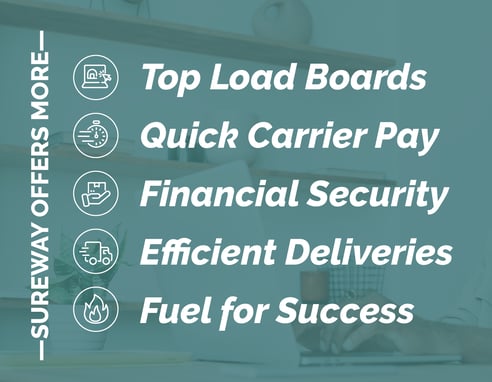
To me, an agent-first approach means having people and processes behind your business that help you do your job effectively. At Sureway, the areas I've found particularly valuable include:
- Customer credit support: Working through credit needs so qualified customer business isn't unnecessarily limited.
- Carrier payment processes: Helping agents develop and maintain strong carrier relationships.
- Carrier compliance resources: Supporting more consistent carrier qualification and risk management.
- Technology investment: Continuing to improve the systems agents use to manage freight.
- Operational support: Helping agents navigate onboarding, account setup, and day-to-day challenges.
- Long-term stability: Providing a foundation for agents who want to build sustainable businesses.
None of these resources replaces the work an agent has to do. You still need to win customers, provide excellent service, solve problems, and manage your operation.
But having the right support can make those responsibilities much more manageable.
Why I Wouldn't Choose a Freight Brokerage Based on Commission Split Alone
I know commission splits are important to independent freight agents. But I'd encourage anyone comparing brokerage opportunities to look beyond the percentage.
A brokerage might offer an attractive split, but what happens if you can't get sufficient customer credit? What if carrier relationships suffer because of payment problems? What if you spend too much time handling administrative issues that could be supported more effectively?
A higher percentage doesn't necessarily mean a better business.
Instead, evaluate the complete arrangement. Ask yourself whether the brokerage can support the volume you handle today and the business you want to build tomorrow. Think about the resources you need, the operational responsibilities you'll retain, and the support available when something goes wrong.
Ultimately, the question isn't just how much commission you keep on each load. It's how much sustainable business you can build with the brokerage behind you.

Frequently Asked Questions About Moving an Independent Freight Agency
Can I bring my existing customers when I switch freight brokerages?
Potentially, yes. Many independent freight agents maintain direct relationships with their customers, but whether those accounts can transition depends on existing contracts, customer approval, and onboarding requirements.
Review your agreements and communicate with customers before assuming they'll move.
How long does it take to transition a freight agency to Sureway?
The timeline depends on your agency's customers, account requirements, and operational complexity.
My transition in 2021 was completed without a missed workday, but every agency's situation is different. Coordinate the timeline directly with Sureway's team.
What should I ask a freight brokerage before joining?
Ask about customer credit approval, carrier payment terms, compliance procedures, technology, onboarding support, accounts receivable responsibilities, commission structure, and financial stability.
Make sure the answers reflect how your particular agency operates.
What is the biggest risk when changing freight brokerages?
One of the biggest practical risks is disrupting customer service during the transition. Inadequate account preparation, unclear communication, or delays in required approvals can interfere with freight operations.
Careful planning and coordination help reduce those risks.
Can an established freight agent continue growing after switching brokerages?
Absolutely, provided the agent has customer demand and the new brokerage can support the operational requirements of that growth.
For my agency, improved access to customer credit and dependable carrier relationships have been especially important.
My Biggest Advice to Agents Considering a Move: Look at the Bigger Picture
If I could go back to 2021 and give myself one piece of advice, it would be to relax and look at the bigger picture.
Moving an established freight agency can sound intimidating, especially when you've spent years building something valuable. But staying somewhere that limits your growth carries its own risks.
Take the time to evaluate your options. Have honest conversations with your customers. Understand the financial and operational support you'll receive. And make sure you're choosing a brokerage that fits the way you want to run your business.
For me, Sureway has been that fit.
I can see myself finishing my career here because I feel confident in the stability of the business and the opportunities ahead.
If you're an independent freight agent considering a move to Sureway, start by having a conversation about your customers, your current challenges, and what you need to grow. Don't just compare commission percentages. Find out what the day-to-day support will actually look like.
And if you're already a Sureway agent, keep looking for ways to strengthen your carrier relationships, improve your internal processes, and work with the support teams available to you.
The best freight agencies don't grow simply by moving more loads. They grow by building dependable relationships, making smart operational decisions, and choosing partners that can grow with them.
That's what I've learned from moving my agency to Sureway — and it's what continues to guide how I run my business today.